Case studies
King's College London · FutureLearn · DFID
PADILEIA — Learning for displaced people
As lead learning designer on the PADILEIA programme, I designed seven MOOCs for Syrian refugees in Jordan and Lebanon — courses in business, engineering, healthcare, digital skills, and English language, delivered through FutureLearn in partnership with King's College London.
I travelled to Lebanon to meet learners and the mentors supporting them, and ran online workshops with refugees who were open, keen, and often funny. Those conversations shaped every design decision that followed. Back in London, I ran curriculum design workshops with King's academics, created storyboards, briefed the teams producing graphics, animations and video, and built the courses in FutureLearn.
The constraints were real. Connectivity in refugee camps was limited — learners came to makeshift hubs set up by the American University of Beirut, and even electricity wasn't reliable. We designed as much material as possible for offline download. All courses were translated into Arabic. And there was a tension we never fully resolved: many learners were acquiring workplace skills, but as refugees they didn't have permission to work in Lebanon. We were equipping people to rebuild Syria later, or to study abroad — but that gap between learning and opportunity was always present.
"The course was so interesting that I was hooked till the very last moment. Thank you so much for creating the course so systematically and efficiently."
— Business Management learner
"Currently I'm leading my own business though I have never learned how to manage a business. This course helps me to be more organized and have more confidence to move forward."
— Business Management learner
"The content was just what I wanted: a basic introduction to the different branches of engineering and an overview of exciting new developments in the field. It was perfect for my level as a non-scientist."
— Principles of Engineering learner
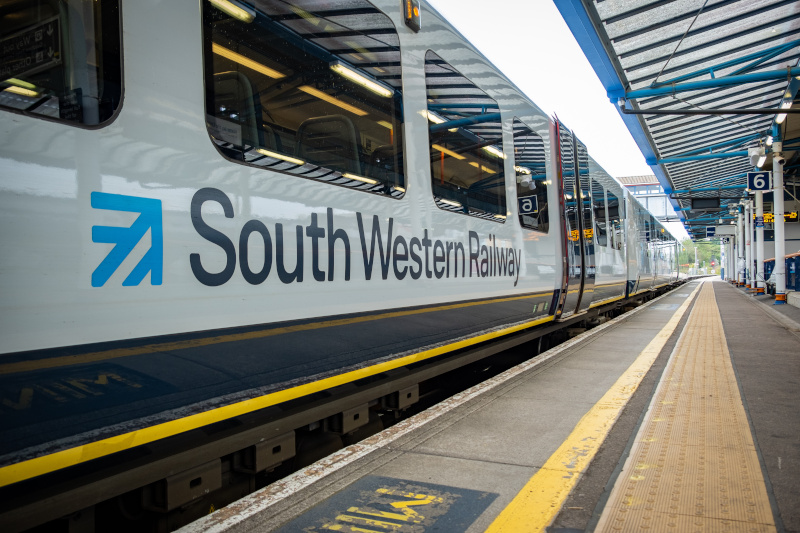
Mitie · South Western Railway · 2024–25
TrackSafe
When Mitie mobilised its South Western Railway contract, critical safety training was only available face-to-face — creating capacity bottlenecks and a single point of failure. I designed and built a scalable digital learning solution covering security protocols, railway byelaws, conditions of carriage, and safety awareness.
The key design challenge was portability: the content needed to work across multiple train operating companies without bespoke rework. I ran the project from discovery through to a live SCORM deployment on the Learning Hub, with a structured review and iteration cycle built in from the start.
Senior leaders at South Western Railway praised the training, and the module has been adopted beyond the original SWR contract.

King's College London · Institute of Psychiatry
MSc Neuroscience of Mental Health
The core of this online MSc was a series of animations and narrated presentations voiced by specialists in their fields — including world-renowned researchers such as the geneticist Robert Plomin. My job was to work with these time-poor experts, organise their knowledge into a coherent learner journey, and translate highly technical material into visual, engaging online learning.
That meant turning concepts like fMRI imaging into animations that postgraduate students — some with limited scientific backgrounds — could genuinely understand. I applied dual coding theory throughout, pairing audio narration with animation rather than relying on text. I created infographics to illustrate abstract themes in mental health research, and introduced interactive components like hotspot images that were new to the academics I was working with.
Alongside the animations, I designed discussions, formative assessments, and case studies — building a programme where each element connected to the next, rather than a collection of standalone lectures.
Working at the edge of AI and learning design
AI is changing how people learn — not by replacing good pedagogy, but by making it possible to deliver personalised, scenario-based learning at a scale and speed that wasn't feasible before. I've been using some of these tools, always experimenting, and sharing results wherver possible.
Most recently, I've been experimenting with multi-agent AI workflows using CrewAI and CoPilot — designing a system where specialised agents (a subject-matter expert, a learning designer, and a curriculum gap analyst) collaborate through a structured flow to produce learning design recommendations. It's essentially what I do with human teams — breaking a complex process into specialised roles and orchestrating the output — but with AI agents. The results have been impressive enough to make me think hard about the future of learning design and what humans can still bring to the role. I'm optimistic, and keen to talk about this new world.
Every project starts with a question, not a solution
People often come to me with a ready-made idea — "we need some screencasts" or "can you build us a short course." My job is to step back and ask what problem we're actually solving, even when that means challenging the brief. In the footsteps of Cathy Moore and plenty of others, I can safely say that good learning design starts before anyone opens an authoring tool.
Challenge the brief
When two senior trainers asked for screencasts to explain a scheduling app used by 30,000 colleagues, I dug into the helpdesk data first. The information people needed was already available — they just found it easier to raise a ticket. I brought in Lean Six Sigma experts to investigate whether the whole process needed rethinking, not just a video. The answer to a performance problem isn't always training.
Find the learning
When our Head of Comms asked for a course outlining sustainability policy, there wasn't any obvious learning — it was a comms piece. Instead of pushing back, we workshopped what they actually wanted to achieve, devised genuine learning outcomes, and turned it into something that changed how people thought, not just what they'd seen. Every piece of content should earn its place.
Build, test, reflect
Once the direction is right, I prototype, test with real users, and iterate. I'm hands-on with HTML, CSS, JavaScript, Python, and multimedia tools — which means I can move from concept to working prototype quickly. I build structured review cycles into every project, and whenever possible, speak to the learners themselves.
Experience
12+ years in instructional design across healthcare, higher education, rail, maritime, law, and corporate L&D. Currently Senior Learning Designer at Mitie.
Skills
Learning needs analysis, ADDIE, SAM, storyboarding, user testing, Kirkpatrick evaluation, HTML/CSS/JS, Python, Adobe suite, Articulate, Blender, AI/LLM integration, SharePoint, SCORM.
Clients & Collaborators
King's College London, FutureLearn, International Maritime Organization, Marine Society, Network Rail, South Western Railway, Whittington Trust, Coracle Online.
Education & Development
AI & Business Analysis apprenticeship (Corndel / Imperial College London). One of a team of Mitie CoPilot Champions. Continuous professional development in AI, learning science, and design.
Let's build something that makes people better at what they do
Available for projects, collaborations, and interesting conversations about learning and AI.